For Laboratory Research Use Only
By RegisteredPeptides.com · June 2026 · 6 min read · Laboratory Science / Research Fundamentals
When sourcing peptides for in vitro experiments, one of the most consequential variables a researcher can control is purity. Yet purity is frequently misunderstood — either treated as a marketing figure or overlooked entirely in favor of price or availability. This post breaks down what peptide purity actually means, how it is measured, and why it directly affects the reliability and reproducibility of your data.
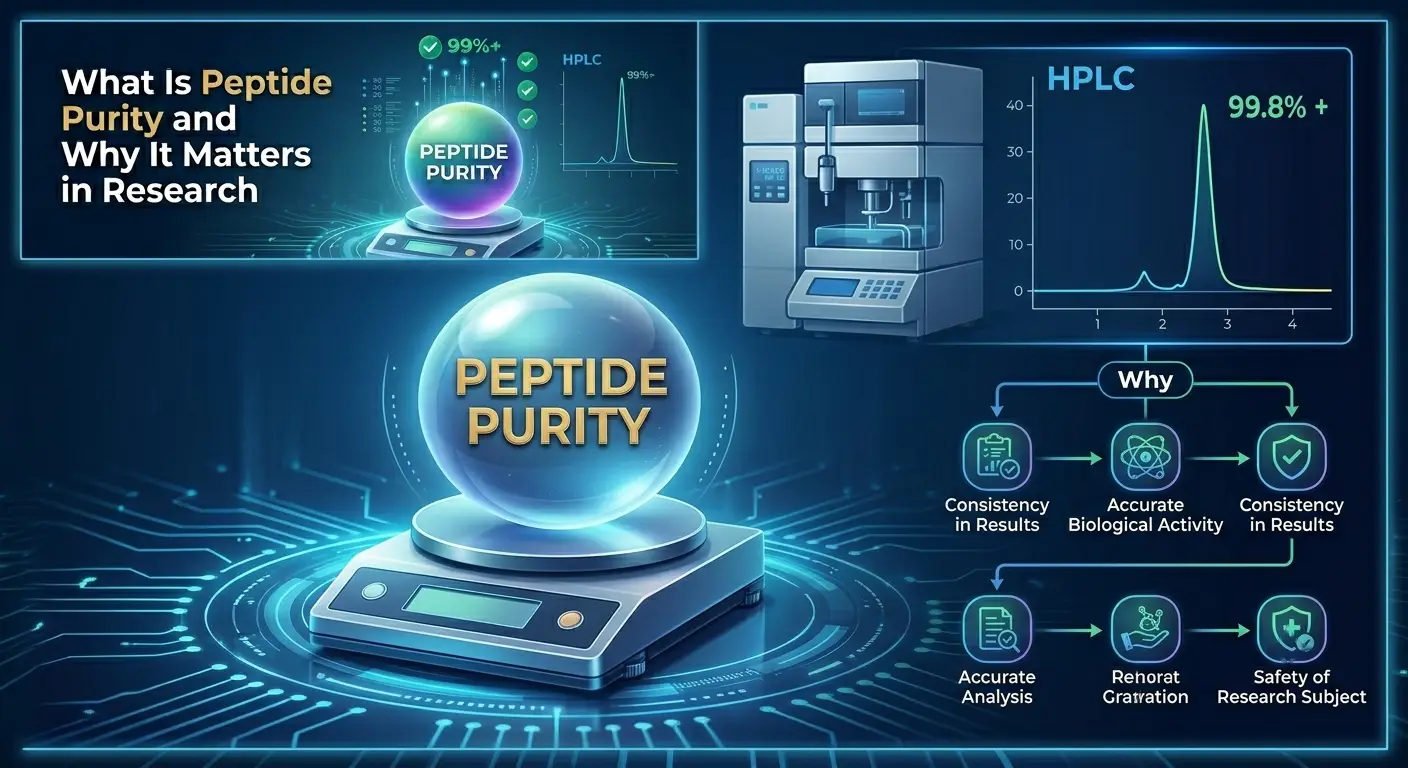
Purity, in the context of synthetic peptides, refers to the percentage of the final product that consists of the intended target sequence relative to all other molecular species present in the sample. A peptide reported at 98% purity means that approximately 98% of the material (by HPLC peak area) is the desired compound, with the remaining 2% comprising impurities.
Those impurities are not random contaminants — they are largely predictable byproducts of the synthesis process itself, including:
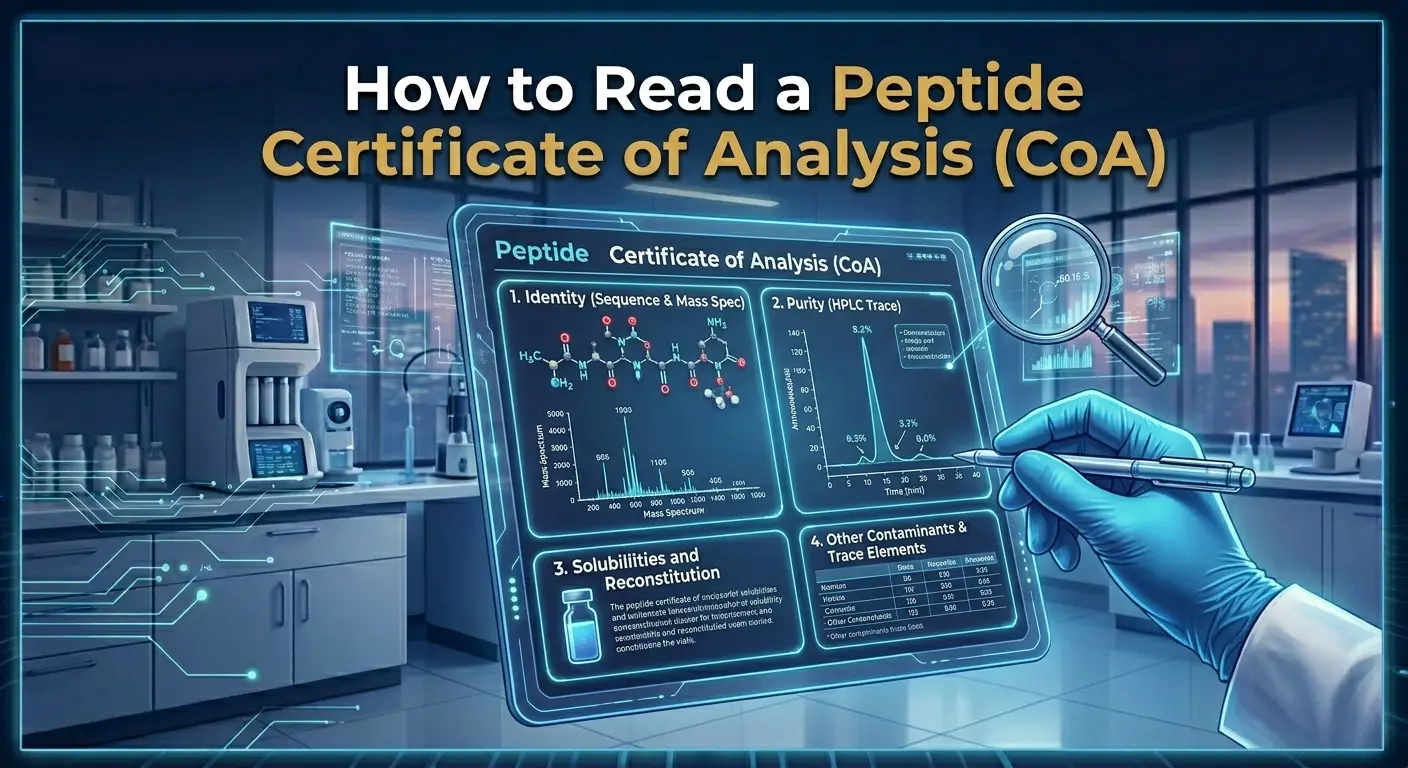
The industry standard for purity analysis is reverse-phase high-performance liquid chromatography (RP-HPLC). In this method, the peptide sample is injected into a column packed with a nonpolar stationary phase, and compounds are separated based on their hydrophobicity as a polar mobile phase gradient is applied. The relative area of each peak in the resulting chromatogram corresponds to the proportion of each molecular species in the sample.
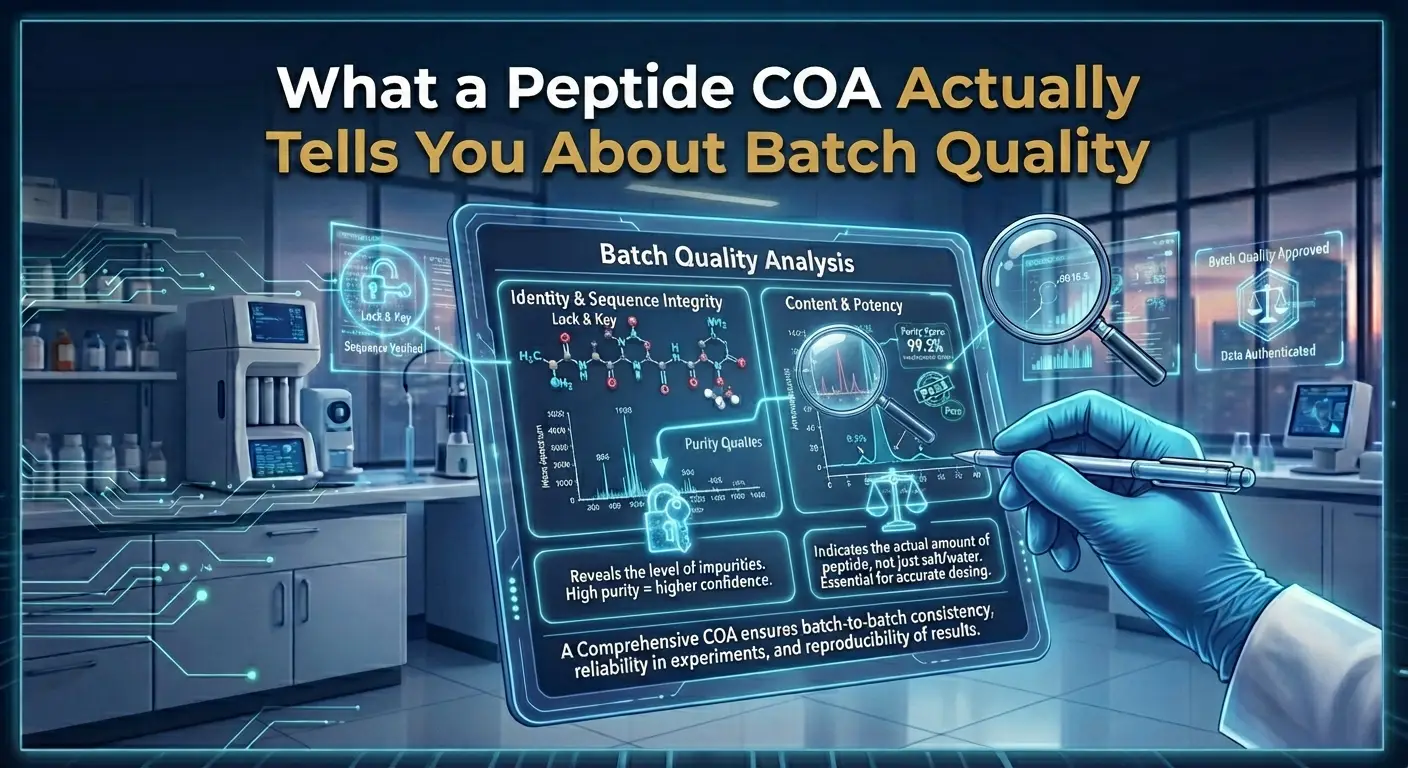
HPLC purity figures should always be accompanied by a Certificate of Analysis (CoA) that specifies:
HPLC alone, however, cannot confirm molecular identity — it only confirms relative abundance. That is why reputable suppliers pair HPLC data with mass spectrometry (MS) confirmation, typically electrospray ionization (ESI-MS) or MALDI-TOF, to verify that the dominant peak corresponds to the correct molecular weight of the intended sequence.
Not all research applications require the same purity threshold. General guidance used across the field:
Using a lower-purity peptide in a high-sensitivity assay introduces the risk that observed effects are partially or entirely attributable to impurities rather than the target compound — a significant threat to data reproducibility and validity.
Purity and concentration are distinct values that are frequently conflated. Purity describes the proportion of the target compound within the total solid material. Concentration describes the amount of material dissolved in a given volume of solvent. A peptide can be high-purity but prepared at a low working concentration, or vice versa.
When preparing stock solutions, researchers should account for purity when calculating molar concentrations — particularly for quantitative assays. For example, a 5 mg vial of a peptide at 95% purity contains approximately 4.75 mg of the active compound, not 5 mg. Failure to correct for purity introduces systematic error into dose-response calculations.
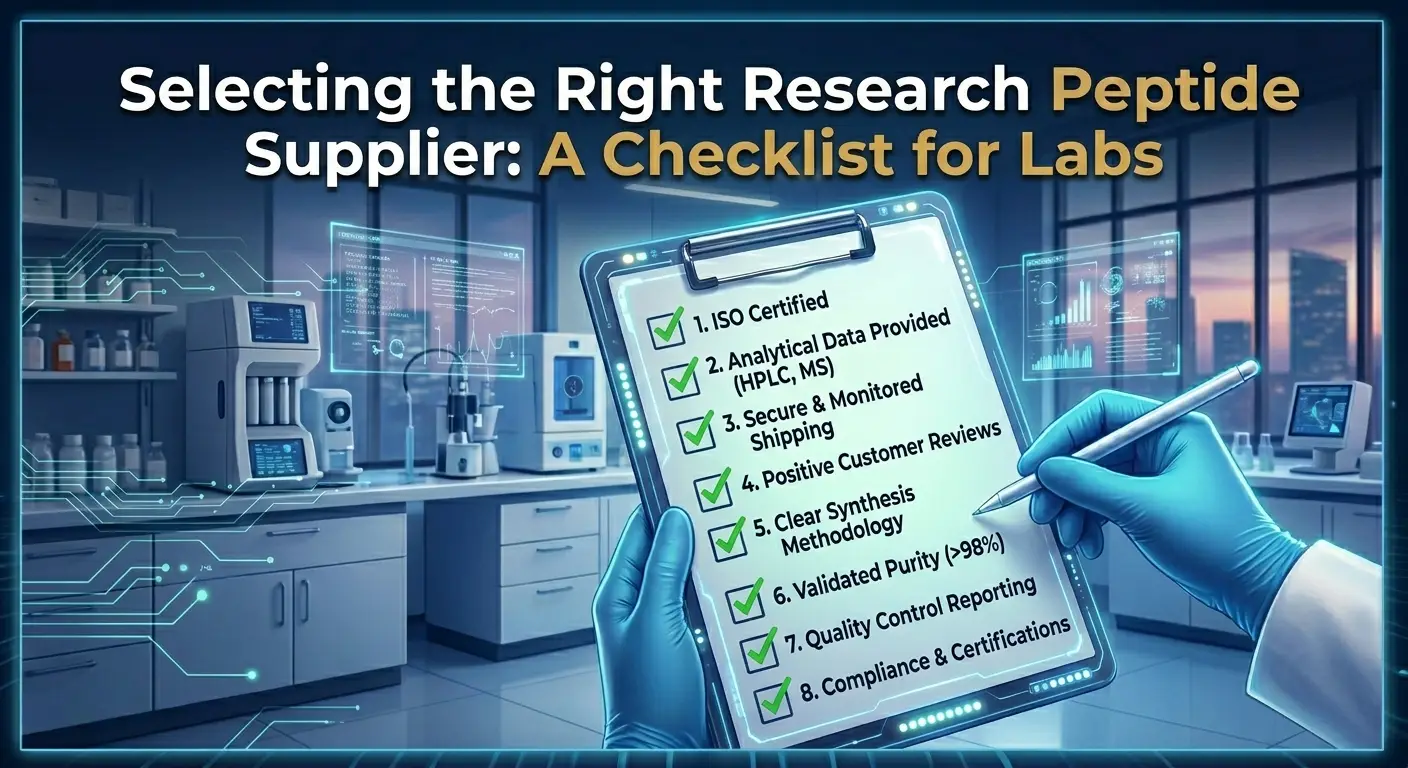
When assessing peptide suppliers for your laboratory, the following documentation standards are indicators of analytical rigor:
At RegisteredPeptides.com, all products are supplied with lot-specific Certificates of Analysis. We are committed to supporting reproducible, well-documented laboratory science.
All products are intended for laboratory and analytical research purposes only.
Lab & Compliance Notes For laboratory and research use only. Not for human or animal use. When you’re evaluating a
13 Jul 2026
For Research Use Only. All content on RegisteredPeptides.com is intended for qualified researchers and licensed laboratory professionals. Products referenced are
18 Jun 2026
For Research Use Only. All content on RegisteredPeptides.com is intended for qualified researchers and licensed laboratory professionals. Products referenced are
18 Jun 2026
Please confirm your age before proceeding