For Research Use Only. All content on RegisteredPeptides.com is intended for qualified researchers and licensed laboratory professionals. Products referenced are not for human or veterinary use and have not been evaluated by the FDA.
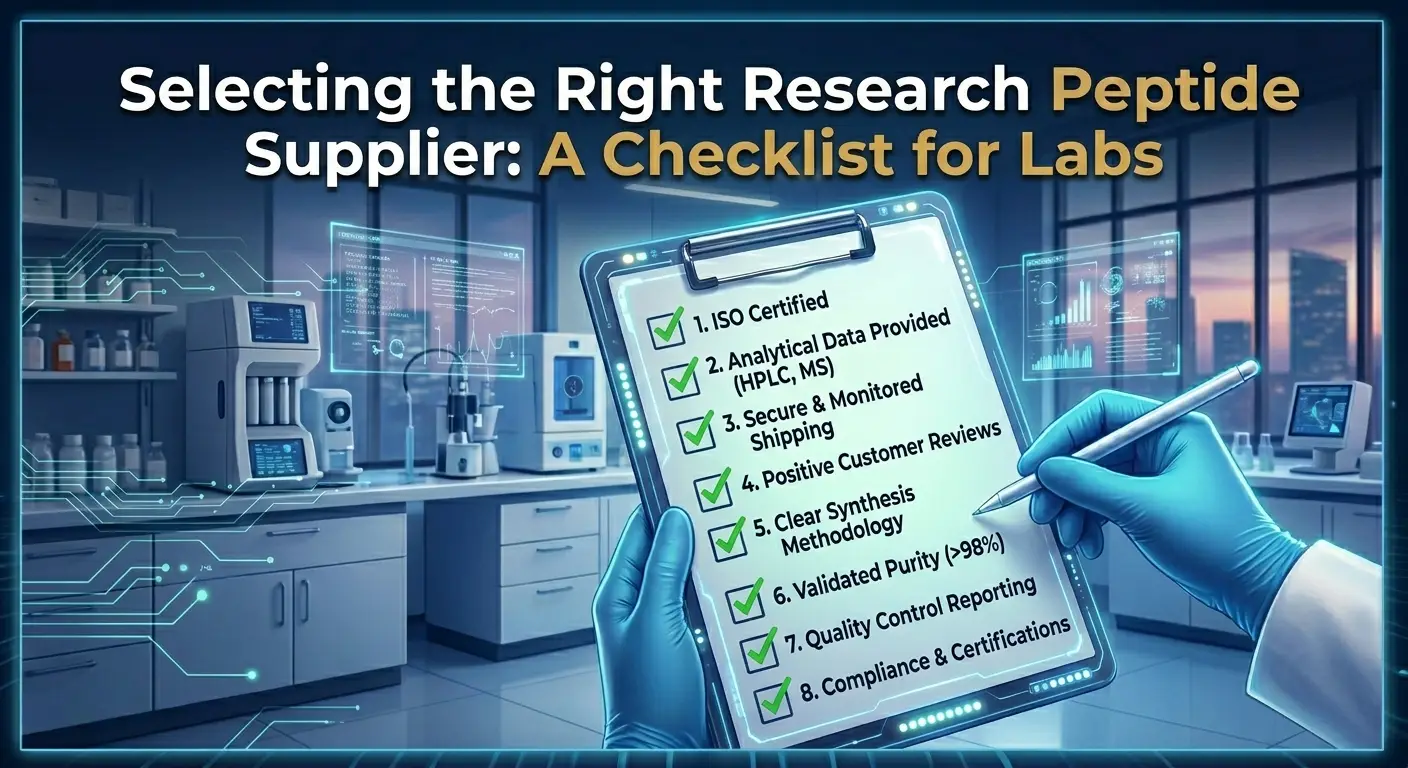
Selecting the Right Research Peptide Supplier: A Checklist for Labs
By RegisteredPeptides.com · June 2026 · 7 min read · Laboratory Management / Procurement
The quality of your research is only as good as the reagents you use. For peptide-based in vitro research, the choice of supplier has a direct and measurable impact on the reproducibility, interpretability, and publishability of your data. Yet supplier evaluation is rarely given the rigorous attention it deserves — particularly when researchers are under time pressure or working with limited procurement budgets.
This post provides a structured checklist for evaluating research peptide suppliers, based on the analytical, compliance, and operational criteria that matter most in a research context.
Category 1 — Analytical Quality Standards
The most fundamental question when evaluating any peptide supplier is whether their analytical practices are sufficient to support rigorous research. Minimum standards should include:
- ✔ Lot-specific Certificates of Analysis provided with every product — not generic batch documents;
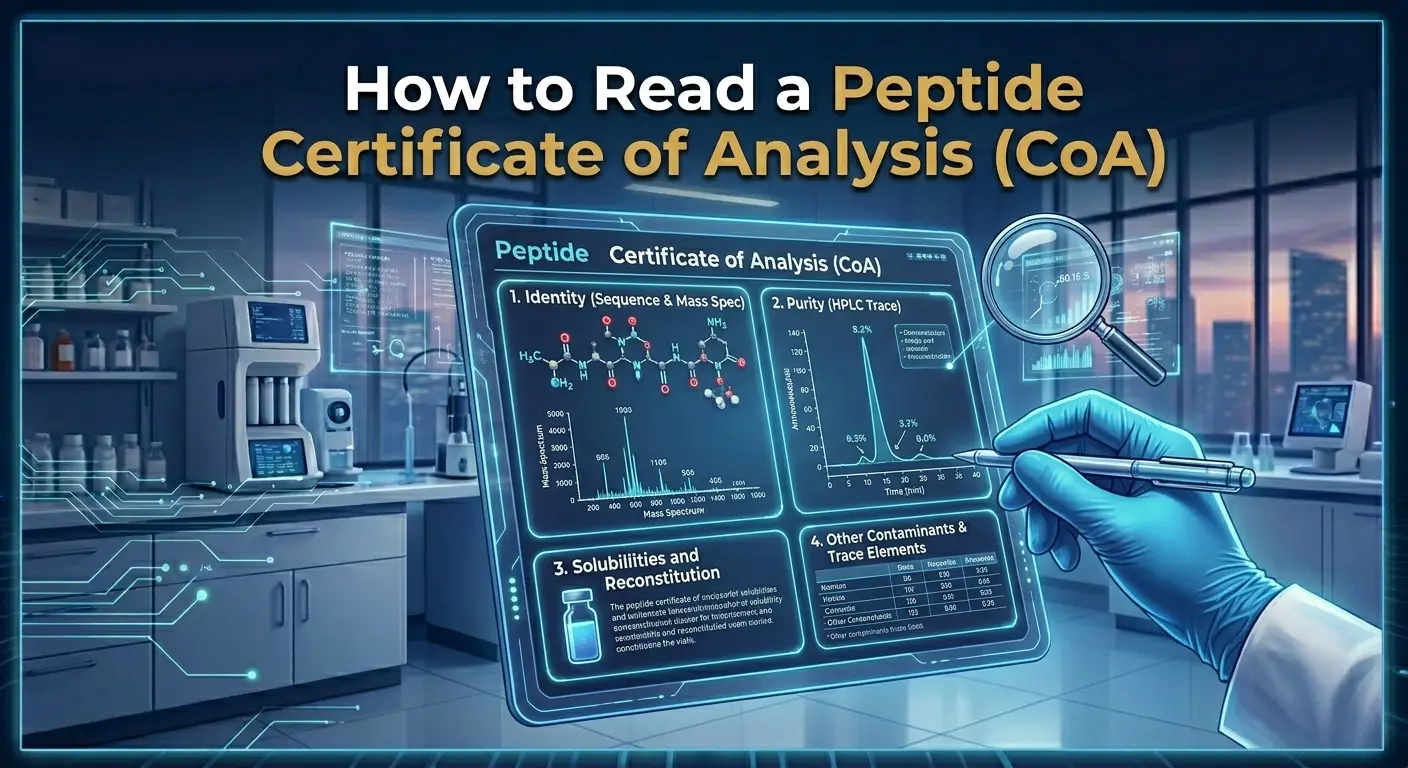
- ✔ HPLC purity data with disclosed detection wavelength, column specifications, and gradient conditions;
- ✔ Mass spectrometry confirmation (ESI-MS or MALDI-TOF) verifying identity of the primary peak;
- ✔ Raw chromatogram availability upon request, not just a summary purity figure;
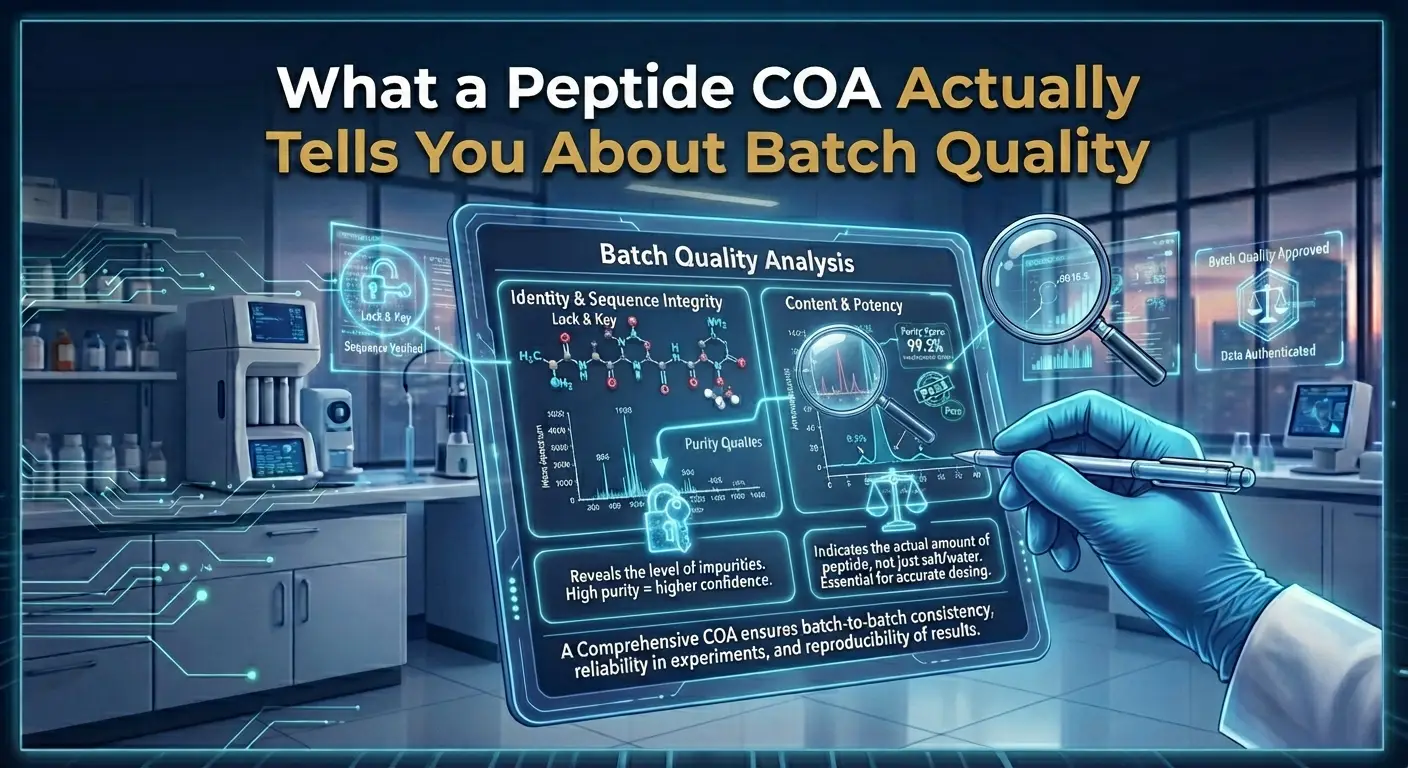
- ✔ Net peptide content disclosure — distinguishing actual peptide mass from counterions and residual water, critical for accurate concentration preparation;
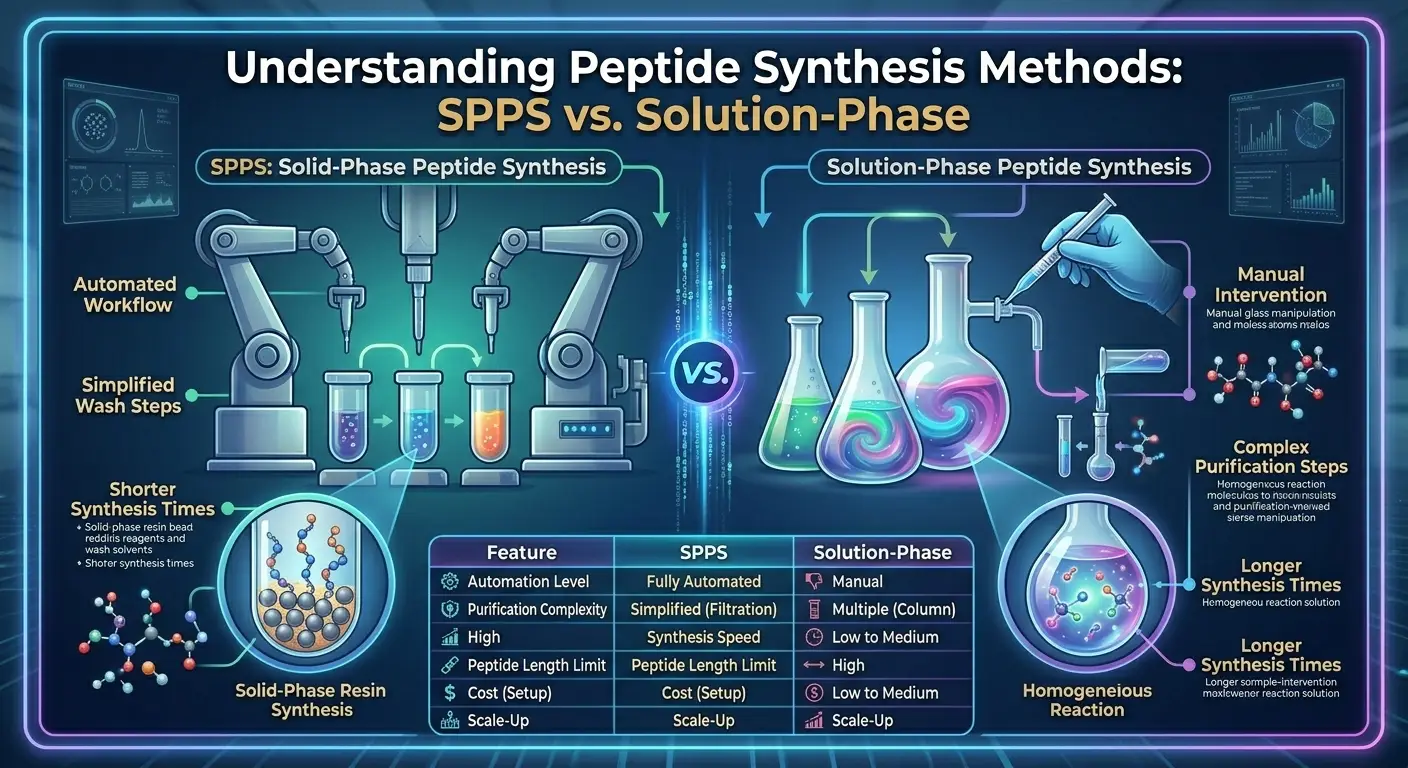
- ✔ Clear disclosure of synthesis method (Fmoc SPPS, Boc SPPS, solution-phase, or hybrid).
Note: A supplier who cannot or will not provide raw HPLC chromatograms or mass spectrometry data upon request should be treated with significant caution, regardless of the purity figure listed on their product page.
Category 2 — Compliance and Eligibility Verification
A reputable research peptide supplier should take their compliance responsibilities seriously. For your institution’s protection as well as your own, look for:
- ✔ Explicit research-use-only designation on all product listings, not buried in fine print;
- ✔ Eligibility verification at point of purchase — suppliers who sell to anyone with a credit card, with no verification process, are not operating a compliant research chemical business;
- ✔ Age verification mechanisms consistent with their stated policies;
- ✔ Restricted shipping policies — compliance-conscious suppliers limit shipments to jurisdictions and customers they can verify, and do not ship internationally to jurisdictions with known restrictions on research chemicals;
- ✔ Clear terms and conditions that define permitted and prohibited uses of their products, creating a documented paper trail of intended use.
Working with a supplier who maintains clear compliance practices protects your institution from reputational and regulatory risk, particularly when procurement decisions are subject to institutional review.
Category 3 — Product Range and Custom Synthesis Capability
Depending on your research program’s scope, consider whether the supplier can meet your evolving needs:
- ✔ Catalog depth: Does the supplier carry the specific sequences you need, or are you limited to a narrow generic catalog?
- ✔ Custom synthesis capability: Can they synthesize novel sequences, cyclic peptides, stapled peptides, or peptides with non-natural amino acid substitutions?
- ✔ Available modifications: Common research modifications include fluorescent labels (FITC, TAMRA, FAM), biotin conjugation, PEGylation, N- and C-terminal modifications, and isotope labeling (e.g., ¹³C, ¹⁵N for NMR or mass spectrometry applications);
- ✔ Scale flexibility: Can they supply from milligram quantities for pilot experiments to gram-scale for larger studies, with consistent quality across scales?
Category 4 — Storage, Shipping, and Cold Chain Integrity
Even a perfectly synthesized and characterized peptide can arrive degraded if shipping and handling practices are inadequate:
- ✔ Temperature-appropriate packaging: Suppliers should use insulated packaging and ice packs or dry ice for temperature-sensitive compounds, with clear documentation of the shipping conditions used;
- ✔ Transit time minimization: Excessive transit time, particularly in summer months or to remote locations, introduces thermal stress. Suppliers should offer expedited shipping options for sensitive compounds;
- ✔ Secure and tamper-evident packaging: Vials should arrive sealed and intact, with no evidence of moisture ingress into the lyophilized material;
- ✔ Domestic shipping reliability: For U.S.-based laboratories, domestic-only suppliers with established carrier relationships typically offer more predictable transit and easier resolution of shipping issues than international suppliers.
Category 5 — Transparency and Customer Support
The relationship with a peptide supplier should support your research, not complicate it. Evaluate:
- ✔ Responsiveness: Can you reach a knowledgeable contact to discuss analytical questions, reconstitution challenges, or custom synthesis requirements?
- ✔ Documentation support: Will the supplier provide additional analytical data (e.g., amino acid analysis, endotoxin testing, additional purity runs) when requested for publication or regulatory purposes?
- ✔ Transparent pricing: Are pricing, lot availability, and lead times for custom synthesis communicated clearly?
- ✔ Clear return and refund policies: Particularly for large custom orders, understanding the supplier’s policy on quality disputes before placing an order is essential;
- ✔ Publication support: Some suppliers can provide documentation suitable for citing in the methods section of a research paper, including full CoA data and synthesis method description.
A Note on Price as a Sole Selection Criterion
Research budgets are real constraints, and price matters. However, selecting a peptide supplier based primarily on the lowest per-milligram cost is a false economy in most research contexts. The cost of repeating a failed experiment due to a compromised or incorrectly characterized reagent — in researcher time, consumables, and delayed timelines — routinely exceeds any savings from cheaper sourcing.
A better framework: establish the minimum analytical and compliance standards your research requires, identify suppliers who meet those standards, and then compare pricing among compliant options. In many cases the price differential between qualifying suppliers is modest.
Why RegisteredPeptides.com
RegisteredPeptides.com was built specifically for the research community, with the compliance, documentation, and analytical standards that rigorous in vitro research demands. Every order ships with a lot-specific Certificate of Analysis. We verify the eligibility of every customer before processing an order. And we ship exclusively within the United States, ensuring domestic reliability and regulatory clarity for U.S.-based laboratories.
If you have questions about our products, analytical documentation, or custom synthesis options, contact our support team at [email protected] or call +1 (510) 389-8737.