For Laboratory Research Use Only
By RegisteredPeptides.com · June 2026 · 7 min read · Laboratory Protocols / Sample Handling
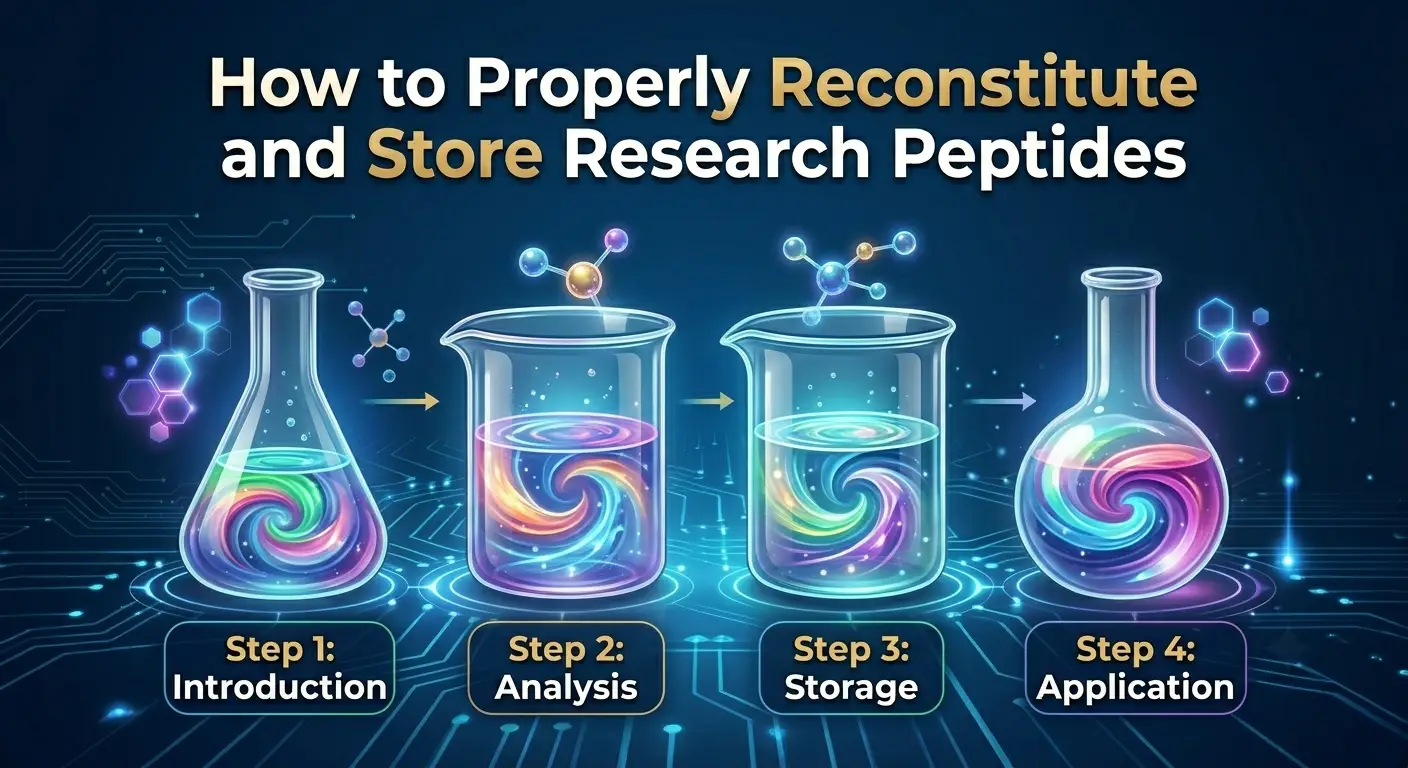
Improper reconstitution and storage of lyophilized peptides is one of the most common — and most avoidable — sources of experimental variability in laboratory research. Even a high-purity, analytically verified peptide can yield inconsistent or uninterpretable results if it is handled incorrectly before use. This guide outlines established best practices for reconstituting and storing research-grade peptides to preserve compound integrity and support reproducible data.
Most research-grade peptides are supplied as a lyophilized (freeze-dried) powder rather than in solution. Lyophilization removes water by sublimation under vacuum, leaving a stable, dry solid that is significantly more resistant to degradation during shipping and long-term storage than an aqueous solution would be.
In lyophilized form, peptides are typically stable for 12–24 months or longer when stored correctly. Once reconstituted into solution, stability depends heavily on the specific sequence, solvent, concentration, pH, and storage temperature — factors that vary considerably between compounds.
Before opening a vial of lyophilized peptide, allow it to equilibrate to room temperature while still sealed. This prevents condensation from forming on the powder when cold material is exposed to ambient air — moisture can degrade hygroscopic peptides rapidly. Allow at least 15–30 minutes for small vials to reach room temperature before proceeding.
Solvent selection is the most critical decision in the reconstitution process. The wrong solvent can result in incomplete dissolution, aggregation, or chemical degradation of the peptide. General guidelines by compound character:
Prepare a concentrated stock solution rather than a working concentration directly. A typical stock concentration of 1 mg/mL provides flexibility for serial dilution into your assay system and minimizes repeated freeze-thaw cycles of the primary material.
Add solvent slowly to the vial — do not add the powder to the solvent — and gently swirl or briefly sonicate in a water bath until fully dissolved. Avoid vigorous vortexing, particularly with longer sequences or sequences prone to aggregation.
Confirm dissolution visually and, where possible, by UV absorbance at 280 nm (if the sequence contains Trp or Tyr residues) or by HPLC analysis of the reconstituted material.
One of the most impactful steps researchers can take to preserve peptide integrity over time is to aliquot the reconstituted stock solution into single-use volumes before storage. Each freeze-thaw cycle introduces the risk of:
Pre-aliquoting into low-binding microcentrifuge tubes (0.5 mL or 1.5 mL, polypropylene) sized to your typical experimental volume eliminates the need to thaw and refreeze the bulk stock. Label each aliquot clearly with compound name, lot number, concentration, solvent, and date of preparation.
Appropriate storage temperature depends on the expected duration of storage and the stability profile of the specific compound:
Avoid storing peptides in frost-free freezers, which cycle through partial thaw events during defrost cycles. A dedicated −20°C or −80°C non-frost-free unit is strongly preferred for long-term peptide storage.
Rigorous laboratory documentation of peptide handling is both good scientific practice and, in many institutional and regulatory contexts, a compliance requirement. A complete handling record should include:
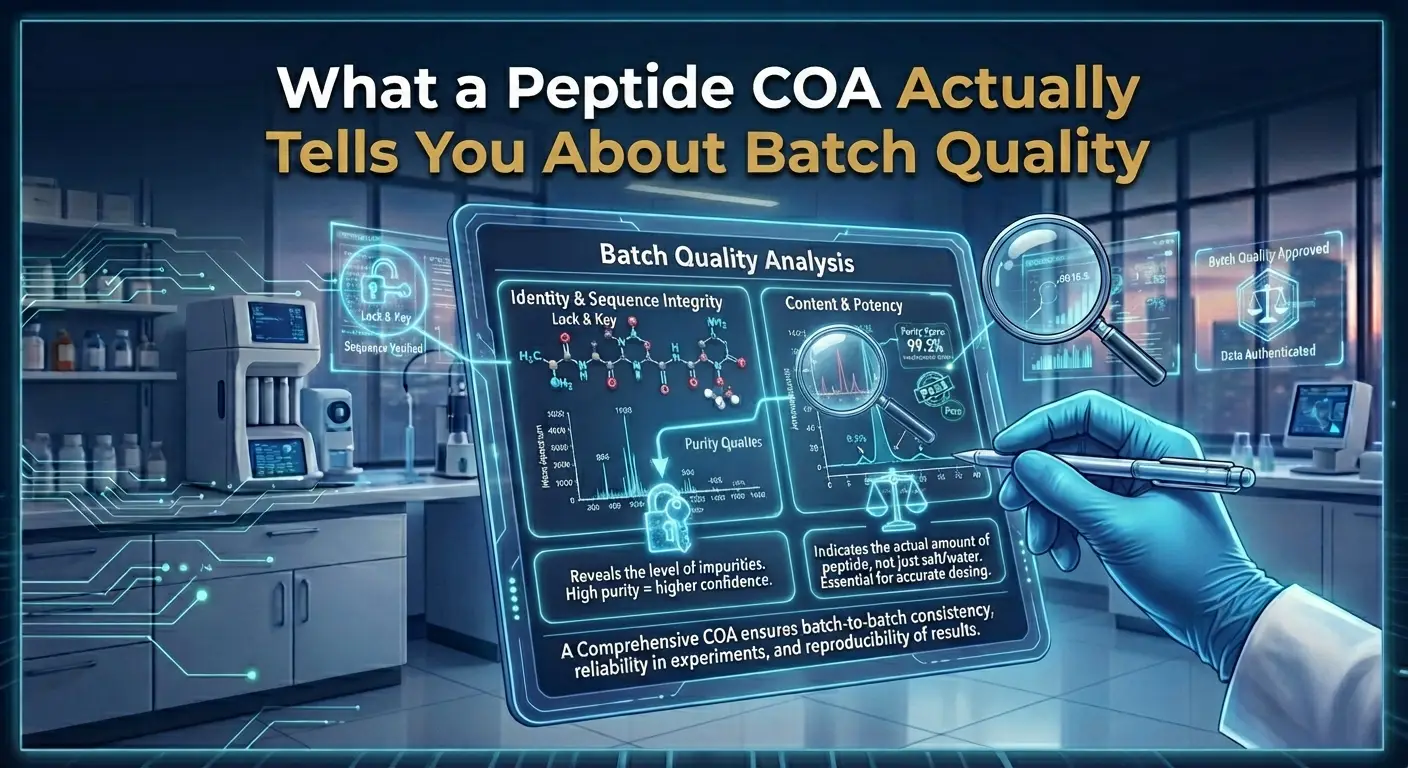
RegisteredPeptides.com provides lot-specific Certificates of Analysis with all orders to support your documentation requirements.
All products are intended for laboratory and analytical research purposes only.
Lab & Compliance Notes For laboratory and research use only. Not for human or animal use. When you’re evaluating a
13 Jul 2026
For Research Use Only. All content on RegisteredPeptides.com is intended for qualified researchers and licensed laboratory professionals. Products referenced are
18 Jun 2026
For Research Use Only. All content on RegisteredPeptides.com is intended for qualified researchers and licensed laboratory professionals. Products referenced are
18 Jun 2026
Please confirm your age before proceeding