Lab & Compliance Notes
For laboratory and research use only. Not for human or animal use.
When you’re evaluating a Certificate of Analysis (COA) for a research peptide batch, it’s tempting to judge quality by volume. The more panels and checkmarks on the page, the safer the material seems. Purity, identity, heavy metals, endotoxins, sterility: a long list feels reassuring.
But talk to analytical chemists who work in independent lab testing, and a different picture emerges. Several of the tests that show up on flashy consumer-facing COAs add very little real information about whether a synthetic peptide is what it claims to be. Knowing which metrics genuinely verify a compound, and which are mostly there to look thorough, makes you a much better-informed buyer.
Tests That Sound Important But Rarely Tell You Much
Heavy Metals Panels
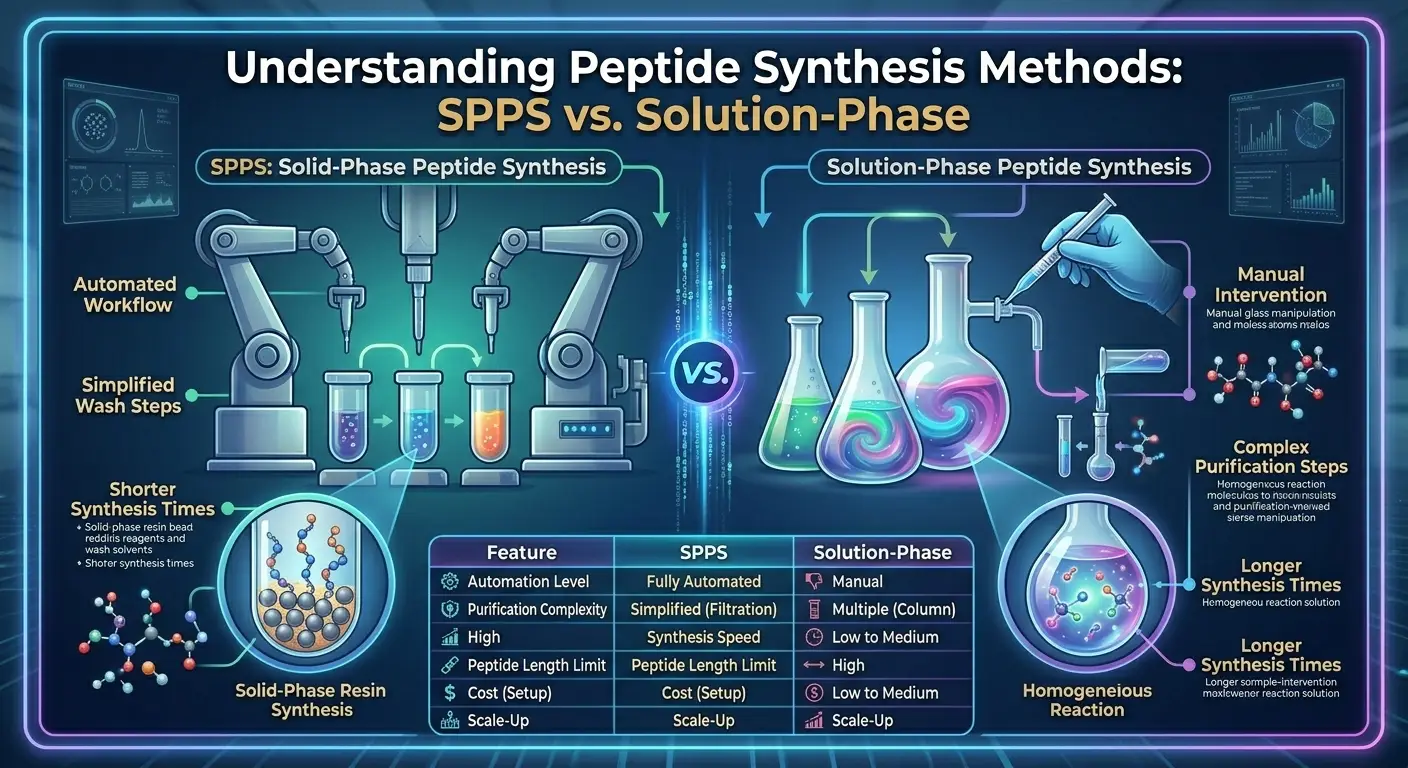
This expectation carries over from industries like herbal supplements or botanical extracts, where plants absorb lead, arsenic, or cadmium directly from soil. Research peptides aren’t grown. They’re built through solid-phase peptide synthesis (SPPS), a stepwise chemical process using purified amino acid derivatives and standard laboratory solvents. There’s no soil, no mineral uptake, and no heavy-metal catalyst pathway in the synthesis itself. Running a heavy metals panel on a peptide is checking for a contaminant that has no obvious route into the product in the first place.
Sterility & Endotoxin Claims
A “sterile” stamp on a COA can create a false sense that the product is permanently protected from contamination. In reality, a freeze-dried peptide in a sealed vial is dry and bacteriostatic, meaning nothing can grow in it while it stays in that state. Whatever happens to that vial once it’s opened, diluted, or otherwise handled outside the manufacturing environment is a separate question entirely, dependent on the equipment, technique, and materials used at that point, not on what the original COA certified. A pristine sterility result on the sealed powder doesn’t extend to whatever happens downstream in a lab.
The Three Metrics Worth Actually Checking
Skip the secondary checkboxes and look for these instead. These are the tests that are genuinely difficult to fake or paper over.
| Metric |
Method |
Why It Matters |
| Identity |
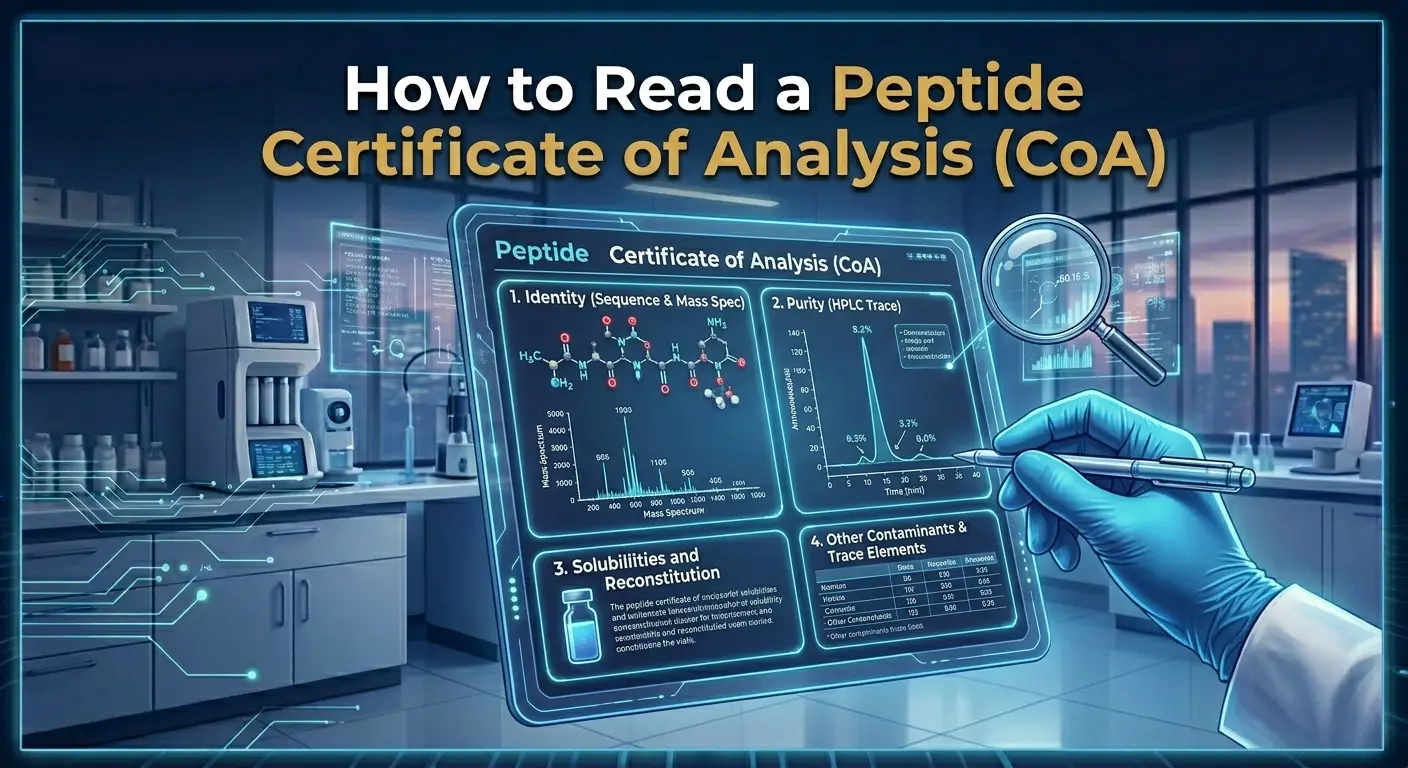
Mass Spectrometry (MS) |
Confirms the molecular weight and amino acid sequence match the intended target compound, verifying you received the correct research material and not a similar but different sequence. |
| Purity |
High-Performance Liquid Chromatography (HPLC) |
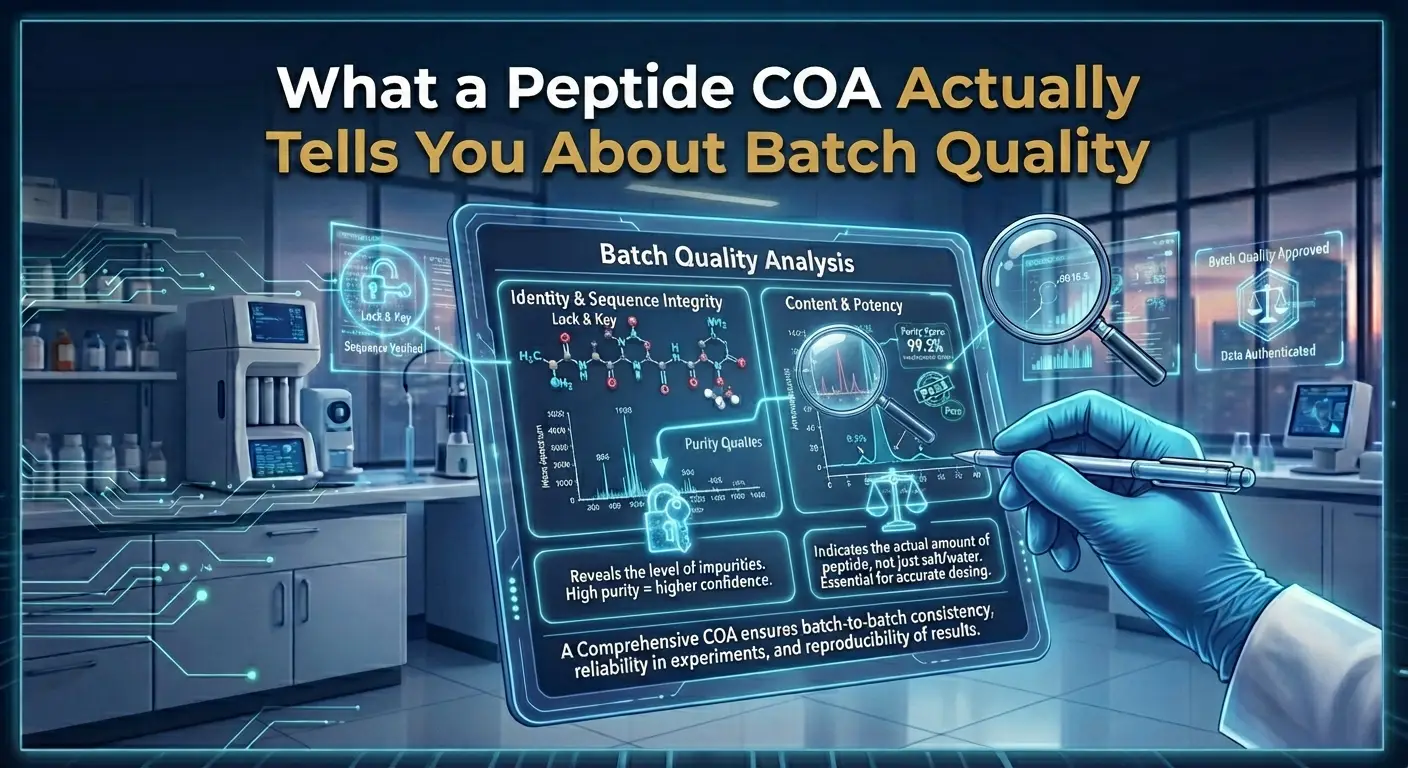
Measures what percentage of the sample is the target compound, flagging synthesis defects like truncated (incomplete) peptide chains. A well-made batch should show 98.0% or higher. |
| Net Content |
Quantitative Mass/UV Analysis |
Confirms the actual milligram weight of active peptide in the vial, separating it from freeze-drying bulking agents, so a vial actually contains the peptide content stated rather than being padded with filler like mannitol. |
What This Means for Sourcing
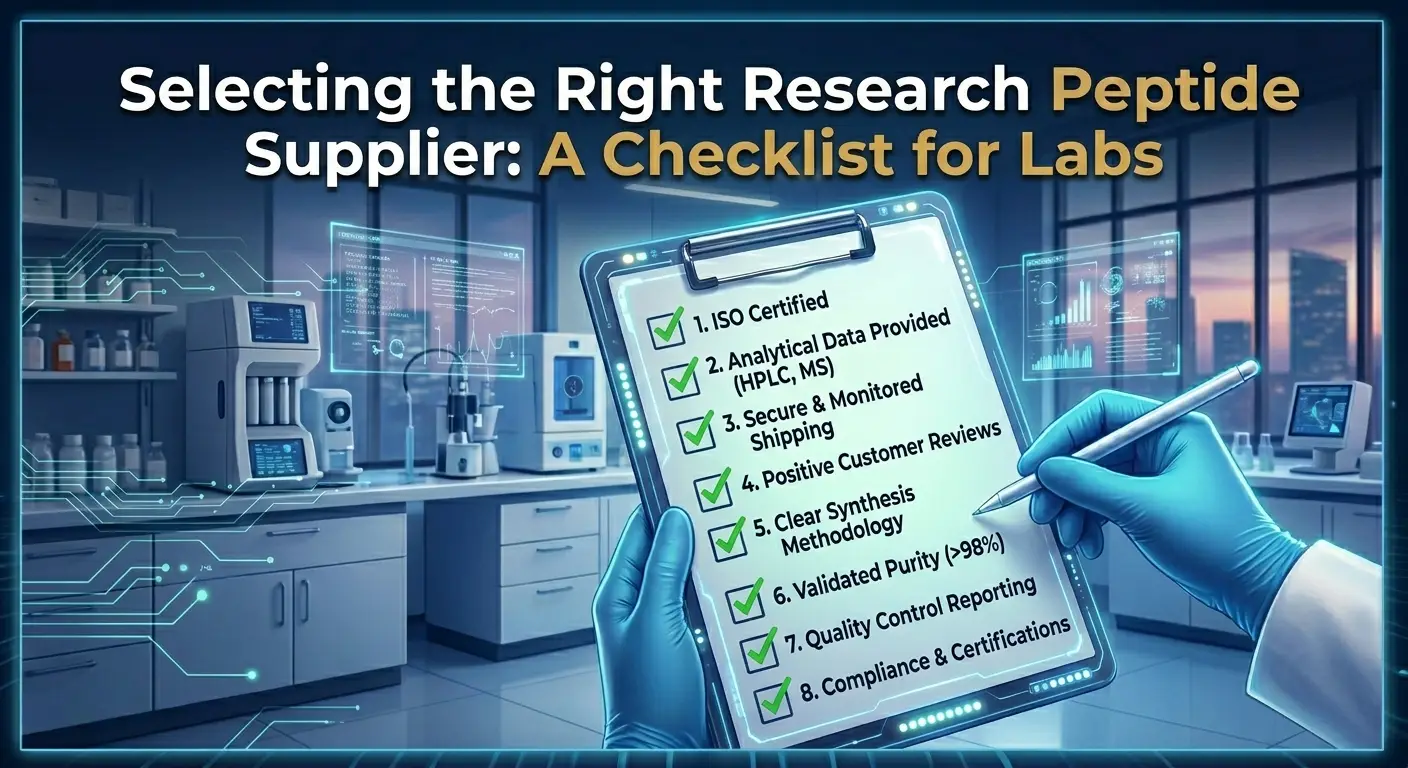
Don’t choose a supplier because their COA has five colorful badges on it. Look for direct, verifiable Mass Spectrometry data confirming identity, an HPLC chromatogram free of obvious synthesis defects, and a clear net content figure. Everything past that is secondary. It can be useful in some contexts, but it’s not what actually tells you whether a batch is what it says it is.
All products referenced are intended strictly for in vitro laboratory research use. Not for human consumption, diagnostic, or therapeutic use.